










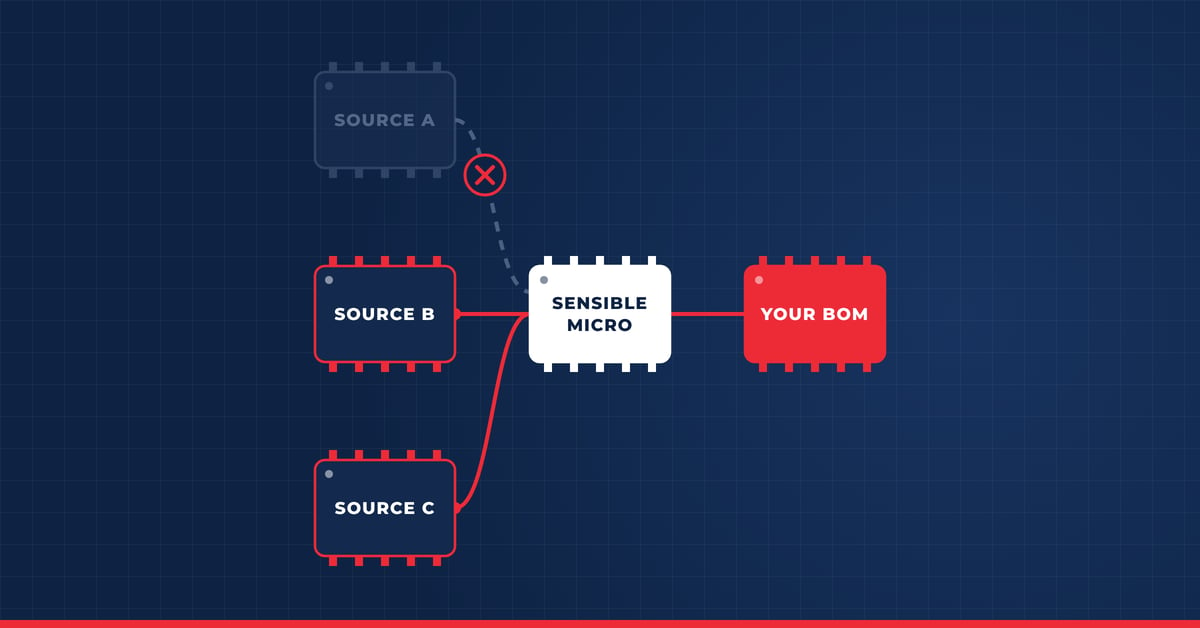
Most companies have an alternate sourcing plan of some kind. It's usually a cross-reference in a spreadsheet, a second distributor's phone number, and a general feeling that someone will figure it out. Then a primary source dries up, and the plan gets its first real test.
Here's how to build one that holds up under pressure, before you need it.
The Mistake That Sets Up the Panic
When a customer reaches out in a rush, the story is usually the same. They'd always been able to buy the part, so they assumed they always would. The backup exists on paper, but nobody ever checked whether that source could cover a full build, or whether engineering would actually approve the alternate.
So when supply tightens, they're doing two jobs at once: hunting for parts and chasing approvals. Both take time, and neither speeds up under pressure.
Three Steps to Start
1. Start with one active BOM. Don't try to fix the whole catalog. Pick a build that matters and flag the parts that could stop it: single-source parts, long lead times and anything nearing EOL.
2. Decide what kind of backup each flagged part needs. Can you buy the exact part from another approved supplier? Does engineering need to qualify a different part? If neither is practical, would a buffer or a scheduled stocking program buy you enough time?
3. Give every action an owner and a date. Purchasing confirms supply and lead times. Engineering reviews and tests candidate alternates. Quality defines the documentation, inspection, or testing required. Write the approvals down, so when a shortage hits, your buyer already knows what they're cleared to release.
Which Parts Go First
Start with the parts that can stop production and take the longest to replace. That might be an FPGA or a microcontroller, or it could just as easily be a connector with a unique footprint or a custom cable assembly. Regardless, a low-cost part can hold up an expensive build.
Two questions help sort the list. How long can we keep building if this part stops shipping today, and how long would it take to get another approved option into production? If you have four weeks of coverage and qualification takes four months, that part goes to the top.
Learn the Warning Signs
Most problems leave clues first. Watch for:
- Lead times that stretch across successive quotes
- Confirmed ship dates that keep slipping
- Suppliers limiting quantities or shortening quote validity
- Several distributors running low at once, with replacement quotes creeping up
If you see a few of those together, call your supplier and ask what they can actually commit to, and when.
End of life works a little differently. Track manufacturer discontinuance notices and LTB deadlines against the exact part numbers on your active BOMs, and decide who owns the response. It's surprisingly easy to get the notice on time and still miss the buy window because purchasing, engineering, and the program team never agreed on how much demand to cover.
What "Qualifying an Alternate" Really Means
It depends on what's changing.
If you're buying the same manufacturer part number through a new source, the review usually centers on supplier approval, traceability and any inspection or testing your customer requires.
If you're changing the part itself, a cross-reference is only a candidate. Engineering still has to check fit, electrical performance, and application-specific needs like firmware or timing, then test it in the actual assembly.
So where do people get stuck? A promising cross-reference turns up and everyone treats it as ready to buy, but samples, test time, customer sign-off, and updates to the approved parts or vendor list all take time. Find out who has to sign off while you still have stock.
How Early Is Early Enough?
For new products, start at design-in. For products already in production, work backwards: how long would it take to get a replacement approved and in hand? If qualification takes four months and you still have to wait for production quantities, build both into your timeline.
Starting late has a price. You can end up paying premium prices, expediting freight, or rushing inspection and testing. The bigger hits are a delayed customer shipment or an idle line, or engineers pulled off a new program to redesign a board that was already in production.
How We Can Help Before There's a Crisis
We can review an active BOM with you, flag parts worth a closer look, and talk through what we're seeing in availability and lead times. A forecast makes it more specific. Tell us what you need over the next few quarters and when your builds are scheduled, we can look at sourcing options, candidate alternates for your engineers to review, or a stocking plan with scheduled releases.
We can also agree up front on the traceability, inspection, and testing you'd require if you ever had to source through the open market. That way purchasing and quality have a plan they can act on when supply gets tight.
Try This This Week
Pull the BOM for a build you can't afford to miss. Pick five parts that would stop it, and ask your team: "If our primary supplier pushes out tomorrow, what can we actually buy and use?"
Then start with the part nobody can answer for.
Want a second set of eyes on your BOM? Reach out to your Sensible Micro rep.